Skip to content
EnergyFirst Blog

EnergyFirst Blog

Practical nutrition science from EnergyFirst

Connect with Us

  • Facebook

Categories

  • Digestive Health
  • Green Superfood
  • Nutrition
  • Omega-3 & Fish Oil
  • Pre-Workout
  • Vitamins & Minerals
  • Weight Management
  • Wellness
  • Whey Protein
Primary Menu
  • Home
  • Blog
  • Shop EnergyFirst
Light/Dark Button
  • Home
  • Pre-Workout
  • Prefuel: What Is In It and How to Get Value From It
  • Pre-Workout

Prefuel: What Is In It and How to Get Value From It

A straight account of what is on the Prefuel label, what the doses mean, and how to take it.
Gerry Morton September 2, 2026 3 minutes read

A plain account of what Prefuel is, what is in it, and how to use it so that the ingredients actually do their jobs.

What it contains

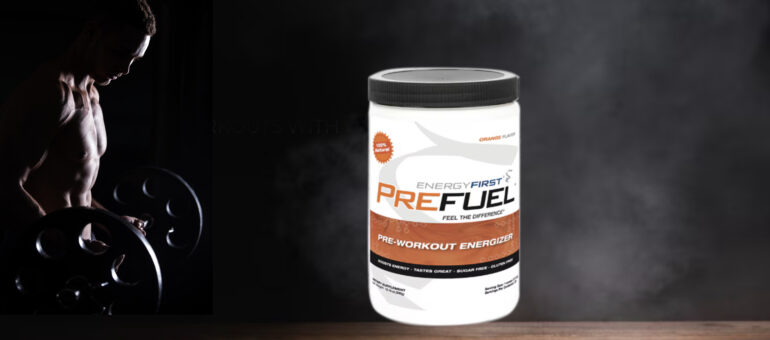
Prefuel is an orange-flavored, sugar-free pre-workout. A serving has 10 calories, 1.5 g of carbohydrate and zero sugar, it is vegan, and a tub holds 30 servings. The label lists six blends:

  • Nitric Oxide & Cell Volumizing blend, 4.5 g: citrulline, glutamine, taurine, glycine and arginine.
  • Anabolic Strength blend, 2.9 g: creatine, beta alanine, BCAAs and betaine.
  • Energy Focus & Fatty Acid Oxidation blend, 940 mg: L-tyrosine, L-carnitine, green tea and green coffee bean extracts.
  • Antioxidant blend, 435 mg: NAC, green tea, grape seed and turmeric.
  • Key Adaptogen blend, 170 mg: organic maca, ashwagandha and Siberian ginseng.
  • Absorption blend, 25 mg.

It is free of added sugar, which distinguishes it from the energy drinks it is meant to replace.

What the doses mean

The largest blend is the Nitric Oxide & Cell Volumizing blend, built on amino acids, including citrulline and arginine, which are involved in nitric oxide production. The energy blend pairs L-tyrosine and L-carnitine with green tea and green coffee bean extracts.

Creatine sits in the Anabolic Strength blend, which totals 2.9 g across four ingredients. That puts the creatine in a serving below the 3 to 5 g daily dose used in the research. Creatine also works by saturating muscle stores over weeks of daily intake, not within a single session. If you want its effect on strength and lean mass, take 3 to 5 g of creatine monohydrate every day, rest days included, as a separate habit.

How to use it

  • Timing: mix one scoop with water and drink it 30 to 45 minutes before training.
  • Creatine separately: if strength and lean mass are the goal, add 3 to 5 g of creatine monohydrate a day on its own.
  • Sleep first. Sleep matters more to your training than any pre-workout does.

What to expect, honestly

Prefuel is a light, low-calorie drink to have before a session, not a heavily stimulated pre-workout. If you are expecting a strong flush and tingle, this is not that product. The tingling in those products comes from large single doses of beta alanine and is unrelated to any benefit.

Who should not take it

Anyone with a cardiovascular condition or uncontrolled high blood pressure, anyone with impaired kidney function, and anyone pregnant or breastfeeding should treat this as a question for their doctor rather than a label. That applies to any pre-workout supplement, not just this one.

Related reading

  • Should You Take a Pre-Workout Supplement?
  • Pre-Workout Doses That Actually Matter
  • Protein and Recovery: What Actually Helps After Training

Prefuel works alongside ProEnergy: the pre-workout for the session, the protein for what happens after it.

About the Author

Gerry Morton

Administrator

Gerry Morton is CEO of EnergyFirst, which he acquired in 2004. He holds a master's degree in nutrition and an executive MBA from UCLA Anderson, and is the author of The Energy Guidebook. He has finished four Ironman triathlons and more than fifty marathons, which is where most of what he writes about here has been tested. He lives in Manhattan Beach, California.

Visit Website View All Posts

Post navigation

Previous: Omega-3s and Heart Health: An Honest Reading of the Evidence
Next: Pre-Workout Doses That Actually Matter

Related Stories

Creatine: What the Evidence Actually Supports - EnergyFirst blog article card
  • Pre-Workout

Creatine: What the Evidence Actually Supports

Gerry Morton September 5, 2026
Black tub of EnergyFirst Prefuel pre-workout powder
  • Pre-Workout

Should You Take a Pre-Workout Supplement?

Gerry Morton September 2, 2026
Hand writing in a notebook beside a green plant
  • Pre-Workout

Pre-Workout Doses That Actually Matter

Gerry Morton September 2, 2026

Trending News

Whey Protein Isolate: What It Is and How to Use It Dairy cows grazing in a pasture beside a tree 1
  • Whey Protein

Whey Protein Isolate: What It Is and How to Use It

October 11, 2026
Whey Protein and Lactose Intolerance: Why Isolate Is Usually the Answer Whey Protein and Lactose Intolerance - EnergyFirst blog article card 2
  • Digestive Health
  • Whey Protein

Whey Protein and Lactose Intolerance: Why Isolate Is Usually the Answer

September 29, 2026
Protein and Lean Mass on GLP-1 Medications: What the Data Show Protein and Lean Mass on GLP-1 Medications - EnergyFirst blog article card 3
  • Weight Management

Protein and Lean Mass on GLP-1 Medications: What the Data Show

September 5, 2026
Whey Isolate vs Concentrate: Why Isolate Is Worth Paying For Whey Isolate vs Concentrate: Why Isolate Is Worth It - EnergyFirst blog article card 4
  • Whey Protein

Whey Isolate vs Concentrate: Why Isolate Is Worth Paying For

September 5, 2026
Collagen vs Whey: Different Tissues, Different Jobs Collagen vs Whey: Different Tissues, Different Jobs - EnergyFirst blog article card 5
  • Whey Protein

Collagen vs Whey: Different Tissues, Different Jobs

September 5, 2026

About Author

Gerry Morton

Gerry Morton is CEO of NutriScience Corporation, which owns EnergyFirst, and the author of The Energy Guidebook. He holds a master's in nutrition and an executive MBA from UCLA Anderson.

Connect with Us

  • Facebook

You may have missed

Dairy cows grazing in a pasture beside a tree
  • Whey Protein

Whey Protein Isolate: What It Is and How to Use It

Gerry Morton October 11, 2026
Whey Protein and Lactose Intolerance - EnergyFirst blog article card
  • Digestive Health
  • Whey Protein

Whey Protein and Lactose Intolerance: Why Isolate Is Usually the Answer

Gerry Morton September 29, 2026
Protein and Lean Mass on GLP-1 Medications - EnergyFirst blog article card
  • Weight Management

Protein and Lean Mass on GLP-1 Medications: What the Data Show

Gerry Morton September 5, 2026
Whey Isolate vs Concentrate: Why Isolate Is Worth It - EnergyFirst blog article card
  • Whey Protein

Whey Isolate vs Concentrate: Why Isolate Is Worth Paying For

Gerry Morton September 5, 2026

Our Story

EnergyFirst, a leading company in the all-natural protein and supplement industry, was founded in 1997. We believe that everyone can benefit from drinking a protein shake, whether the goal is optimal nutrition in a meal replacement, an easy and healthy breakfast alternative, a weight loss aid, or a protein supplement for athletes.

EnergyFirst is part of NutriScience Corporation.

Shop EnergyFirst · Privacy Policy

About the Author

Gerry Morton is CEO of EnergyFirst, which he acquired in 2004. He holds a master's degree in nutrition and an executive MBA from UCLA Anderson, and is the author of The Energy Guidebook. He has finished four Ironman triathlons and more than fifty marathons, which is where most of what he writes about here has been tested.

More at gerrymorton.com.

THE ENERGYFIRST COMMUNITY

  • Facebook
© 2026 EnergyFirst® | MoreNews by AF themes.