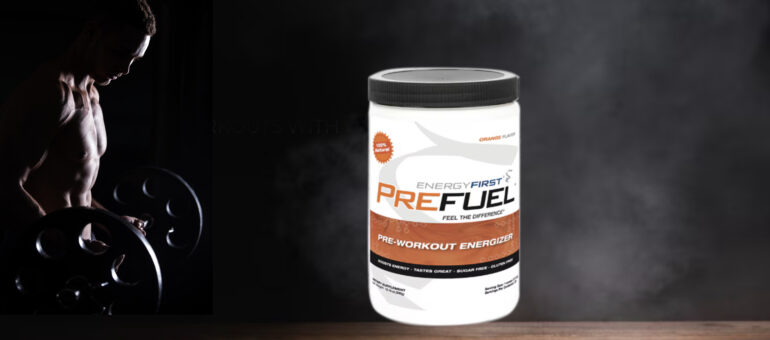
A plain account of what Prefuel is, what is in it, and how to use it so that the ingredients actually do their jobs.
What it contains
Prefuel is an orange-flavored, sugar-free pre-workout. A serving has 10 calories, 1.5 g of carbohydrate and zero sugar, it is vegan, and a tub holds 30 servings. The label lists six blends:
- Nitric Oxide & Cell Volumizing blend, 4.5 g: citrulline, glutamine, taurine, glycine and arginine.
- Anabolic Strength blend, 2.9 g: creatine, beta alanine, BCAAs and betaine.
- Energy Focus & Fatty Acid Oxidation blend, 940 mg: L-tyrosine, L-carnitine, green tea and green coffee bean extracts.
- Antioxidant blend, 435 mg: NAC, green tea, grape seed and turmeric.
- Key Adaptogen blend, 170 mg: organic maca, ashwagandha and Siberian ginseng.
- Absorption blend, 25 mg.
It is free of added sugar, which distinguishes it from the energy drinks it is meant to replace.
What the doses mean
The largest blend is the Nitric Oxide & Cell Volumizing blend, built on amino acids, including citrulline and arginine, which are involved in nitric oxide production. The energy blend pairs L-tyrosine and L-carnitine with green tea and green coffee bean extracts.
Creatine sits in the Anabolic Strength blend, which totals 2.9 g across four ingredients. That puts the creatine in a serving below the 3 to 5 g daily dose used in the research. Creatine also works by saturating muscle stores over weeks of daily intake, not within a single session. If you want its effect on strength and lean mass, take 3 to 5 g of creatine monohydrate every day, rest days included, as a separate habit.
How to use it
- Timing: mix one scoop with water and drink it 30 to 45 minutes before training.
- Creatine separately: if strength and lean mass are the goal, add 3 to 5 g of creatine monohydrate a day on its own.
- Sleep first. Sleep matters more to your training than any pre-workout does.
What to expect, honestly
Prefuel is a light, low-calorie drink to have before a session, not a heavily stimulated pre-workout. If you are expecting a strong flush and tingle, this is not that product. The tingling in those products comes from large single doses of beta alanine and is unrelated to any benefit.
Who should not take it
Anyone with a cardiovascular condition or uncontrolled high blood pressure, anyone with impaired kidney function, and anyone pregnant or breastfeeding should treat this as a question for their doctor rather than a label. That applies to any pre-workout supplement, not just this one.
Related reading
- Should You Take a Pre-Workout Supplement?
- Pre-Workout Doses That Actually Matter
- Protein and Recovery: What Actually Helps After Training
Prefuel works alongside ProEnergy: the pre-workout for the session, the protein for what happens after it.
About the Author