The question comes up constantly and it deserves a direct answer: no, a greens powder cannot replace eating vegetables. The reason is more specific and more interesting than the usual hand-waving about whole foods.
Start with the arithmetic, because it settles most of it
Greens powders typically deliver one to two grams of fiber per serving. Five servings of whole fruit and vegetables deliver roughly fifteen. The adequate intake is 25g a day for women and 38g for men, and most adults fall well short of either.
So a product supplying two grams of fiber cannot be nutritionally equivalent to five to seven servings of vegetables, because five to seven servings of vegetables supply roughly seven or eight times that. This is not a judgment call about mechanisms or bioavailability. It is a subtraction, performed on the product’s own label.
Cost is worth a line too. Registered dietitians at the University of Nebraska–Lincoln put frozen vegetables at roughly 25 cents a serving against about $1.33 a serving for greens powder, and noted that frozen produce carries just as many nutrients as fresh, sometimes more, because it is picked and frozen at ripeness rather than spending a week in transit.
What gets removed in the drying
Water and volume
A cup of spinach is mostly water. That volume is not an inconvenience to be engineered away: it is part of the mechanism. Stomach distension is one of the primary satiety signals, and it operates on physical volume, not on nutrient content. A large salad tells your brain you have eaten. A teaspoon of powder in water does not.
This is why vegetables help with weight management in a way a concentrate cannot replicate. You are eating a large amount of something with very few calories, and displacing something else in the process.
Fiber
Most greens powders contain a small fraction of the fiber of the vegetables they came from, and some processing strips it almost entirely. Fiber is not a passive bulking agent. It slows gastric emptying, moderates the blood glucose response of the whole meal, and, most importantly, feeds the bacteria in your colon.
Those bacteria ferment fiber into short-chain fatty acids, principally butyrate, the preferred fuel of the cells lining your colon. That entire mechanism depends on fiber arriving in quantity. There is no supplement shortcut to it. Most adults eat around half the fiber they should.
It is worth noticing that fiber is where a large share of vegetables’ plausible benefit lives. A powder that removes the fiber has removed the part with the clearest mechanism behind it.
The food matrix
Nutrients in a plant come packaged in structures that affect how they are absorbed. Carotenoids need fat to be absorbed. Some compounds are more available after cooking, others less. Sulforaphane in broccoli only forms when raw plant tissue is broken (chewing, essentially) and requires an enzyme that heat destroys.
Isolate the compounds and you often lose the interaction. This is the recurring lesson of nutrition research: isolated nutrients rarely reproduce the effects of the foods they came from.
Why the “servings of vegetables” claim cannot be substantiated
The claim appears on packaging across the category in various forms: five servings, seven, ten, two pounds of green vegetables. Three things are wrong with it.
It is undefined. There is no regulatory or scientific definition of what “equivalent to a serving of vegetables” means. Equivalent in what? Fiber, demonstrably not. Calories, no. Water volume, no. Satiety, no. Vitamin C: a two-gram serving of dried greens does not carry meaningful vitamin C, which is precisely why acerola or ascorbic acid is so often added. Because the word “equivalent” is never operationalized, it cannot be substantiated, and that unfalsifiability is doing the work.
The label usually refutes the marketing. If a scoop genuinely matched five to seven servings of vegetables on nutrient content, the vitamin and mineral percentages on the supplement facts panel would be enormous. Go and look at one. They are commonly low single digits for calcium and iron. Where a panel does show a big number (vitamin E at over 100% of the daily value, say), that is almost always an added ingredient rather than something intrinsic to dried grass. The impressive figures come from fortification, not from the vegetables.
The regulatory record is instructive. In 2018 the National Advertising Division challenged one greens company over claims including that its product provides the nutrition of over ten servings of whole fruits and vegetables. The company declined to participate in the review and did not provide written substantiation. NAD referred the matter to the Federal Trade Commission, which declined to pursue it, citing resource allocation and enforcement priorities.
Read that correctly. The company was asked to substantiate the claim, refused, and the referral was declined on resource grounds, not on the merits. The absence of enforcement is not a finding that a claim is true. “It is on the label, so it must be allowed” is exactly how this market gets misread.
ORAC: a number its own creator deleted
ORAC scores still appear on greens powder packaging. The USDA, which created the measure in 1991, withdrew its ORAC database in May 2012, citing the absence of scientific evidence that ORAC has any biological significance: specifically, no evidence that the benefits of polyphenol-rich foods can be attributed to their antioxidant capacity.
The technical objections are worth knowing. ORAC measures activity against a single radical species in a test tube. The damaging reaction it is supposed to represent is not characterized. Nothing links ORAC values to health outcomes after consumption. And the in-vitro figure does not survive contact with a body: under 5% of ingested polyphenols are preserved as such, the rest being rapidly metabolized for excretion, so the in-vivo antioxidant effect is probably negligible.
The European Food Safety Authority takes the same view. A number whose issuing agency deleted it fourteen years ago, still printed on packaging today, is a fair illustration of how far this category’s marketing has drifted from its science.
Doses, blends and what a label can actually tell you
The other structural problem is disclosure. Under the rules governing supplement labels, a manufacturer may declare a proprietary blend’s total weight only, listing constituents in descending order with no individual amounts. That is legal and extremely common.
Descending order gives you exactly one piece of information: ingredient one outweighs ingredient two. It tells you nothing about the gap. A 6,000mg blend of twelve ingredients could be 5,500mg of one grass and token amounts of everything else, and you cannot tell from the outside. That is by design.
So the question to ask is not “does this contain spirulina?” but “does this contain a studied dose of spirulina?” On a proprietary blend that question is unanswerable, and unanswerable is itself the finding. Some worked examples of the gap:
- Probiotics. The international consensus definition turns on “adequate amounts”. Health Canada accepts general gut-health benefits at one billion CFU per serving; Italy requires one billion per day. Plenty of greens powders declare a few million. Also check whether CFU is declared at manufacture or at expiry: live organisms decline over shelf life, and the two numbers are not close. See our piece on where the probiotic evidence is strong and where it is not.
- Ashwagandha. Human trials use 250–600mg of root extract daily. An “energy blend” totaling a few hundred milligrams across five ingredients cannot reach that, whichever one predominates.
- Green tea extract and turmeric. Same arithmetic. Trials run at 300–800mg for green tea extract; curcumin trials typically use 500–2,000mg with an absorption enhancer, because unformulated curcumin is famously poorly absorbed.
- Prebiotic fibers. Inulin is a real, studied prebiotic, at five to ten grams a day. At the fraction of a gram that fits in a nine-gram scoop, expect nothing. Inulin is also the usual culprit when a greens powder causes bloating, so the dose is simultaneously too low to work and high enough to be noticed.
- Digestive enzymes. Activity units like USP-U and GDU are not comparable across brands and have no reference standard a shopper can look up. A number you cannot benchmark is not information. See who actually needs digestive enzymes.
The reason nutrition science stopped isolating the good bit
This is the most important context for the whole category, and it is not a hypothetical.
Decades of epidemiology showed that people eating more carotenoid-rich fruit and vegetables had less lung cancer and lower mortality. Beta-carotene was the plausible active ingredient. Two very large trials were publicly funded to confirm it.
The Finnish ATBC trial randomized 29,133 male smokers to 20mg of beta-carotene a day. Over roughly six years, the beta-carotene arm had 18% more lung cancer and an 8% higher overall death rate. The American CARET trial gave over 18,000 smokers, former smokers and asbestos-exposed workers 30mg of beta-carotene with retinyl palmitate. It found 28% more lung cancer and 17% more deaths, and was stopped around two years early for harm.
The pattern generalizes. A Cochrane review of 78 randomized trials covering 296,707 participants found beta-carotene associated with slightly increased all-cause mortality (relative risk 1.05) and vitamin E likewise (1.03). The detail that should settle any argument about methodology: trials at low risk of bias showed stronger harm than the pooled estimate. Better methods made the signal worse, which is the opposite of what you would see if it were an artifact. The US Food and Nutrition Board now advises against beta-carotene supplements for the general population except to prevent vitamin A deficiency.
Be careful about what this does and does not show. It does not show that greens powders are harmful. Nobody has run an equivalent trial on them, and it would be dishonest to imply otherwise. What it shows is narrower and still decisive: the inference “vegetables are good, therefore a concentrate of vegetable components is good” has been tested directly, at scale, with public money, and it failed twice, badly enough to stop a trial early. Every servings-equivalence claim is that same inference made again, without the trials.
Harvard’s nutrition group offers the mechanistic reading. Supplements contain a narrow chemical range: vitamin E supplements are typically alpha-tocopherol alone, where food contains eight forms. Isolated nutrients arrive without the companions they occur with; a cup of strawberries carries vitamin C alongside proanthocyanins and flavonoids. And at high doses, isolated antioxidants can behave as pro-oxidants, producing the opposite of the intended effect.
So what is a greens powder good for?
Framed correctly, it is useful. It delivers a concentrated dose of plant compounds in about ten seconds, with no shopping, washing, chopping or cooking.
That is worth something in specific situations: traveling, a stretch of long working days, illness or recovery when appetite is poor, or simply being a person who has established over several decades that they are not going to eat kale.
It can also be a genuine source of particular nutrients where those are added and declared, and a palatable vehicle: some people will drink greens in a smoothie who will not eat them on a plate.
The right mental model is a floor, not a ceiling. It stops your intake of plant compounds hitting zero on the bad weeks. It does not get you to a good diet.
The thing that would help more
If you are considering a greens powder because your vegetable intake is poor, the highest-return change is not the powder. It is finding two or three vegetables you will reliably eat and building meals around them.
Most people who “don’t like vegetables” dislike boiled ones. Roasting changes the flavor completely. Frozen vegetables are picked and frozen at ripeness and are frequently better nutritionally than fresh produce that has spent a week in transit, and they remove every excuse about spoilage. Adding one vegetable to a meal you already eat beats reinventing your diet.
Use the powder for the gap. Fix the diet for the rest.
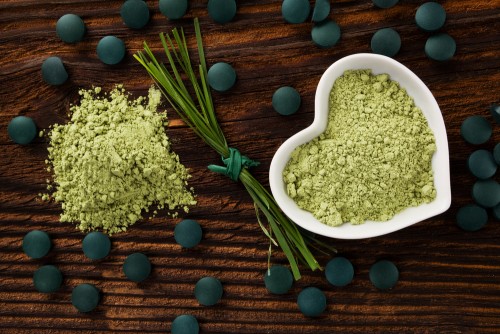
When a greens powder is the right tool, we recommend Greenergy. It is USDA certified organic, with twelve organic greens including spirulina, chlorella, barley grass, wheatgrass, spinach and broccoli. It is vegan, gluten free and non-GMO, 25 calories a scoop, and it mixes into water or a smoothie in seconds. At about $1.17 a day, it is the simplest way we know to get more greens on the days vegetables do not happen. Its 6 probiotic strains are a digestive extra rather than a probiotic dose. If a probiotic is the main thing you are after, take a dedicated one alongside it.
Related reading
- Green Superfood Powder: What It Does, What It Does Not, and How to Choose One
- Fiber: Soluble, Insoluble, and Which One You Actually Need
- Is Organic Food Worth It? A Cost-Benefit Answer
- What Is Actually in Greenergy
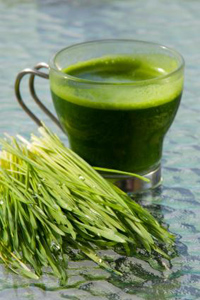
Greenergy mixes into water, juice or a shake: useful for the days when the vegetables did not happen.
About the Author