Skip to content
EnergyFirst Blog

EnergyFirst Blog

Practical nutrition science from EnergyFirst

Connect with Us

  • Facebook

Categories

  • Digestive Health
  • Green Superfood
  • Nutrition
  • Omega-3 & Fish Oil
  • Pre-Workout
  • Vitamins & Minerals
  • Weight Management
  • Wellness
  • Whey Protein
Primary Menu
  • Home
  • Blog
  • Shop EnergyFirst
Light/Dark Button
  • Home
  • Omega-3 & Fish Oil
  • How to Choose a Fish Oil: The Numbers on the Back of the Bottle
  • Omega-3 & Fish Oil

How to Choose a Fish Oil: The Numbers on the Back of the Bottle

The number on the front of a fish oil bottle is almost never the number that matters. Here is how to read the back.
Gerry Morton September 2, 2026 4 minutes read

Fish oil is one of the easiest supplements to buy badly. The number on the front of the bottle is almost never the number that matters, and the most common quality problem is invisible until you open it.

The arithmetic nobody does

A bottle says “1000 mg Fish Oil.” That is the weight of the oil in the capsule, not the amount of omega-3 in it.

What you actually want is EPA and DHA — the two long-chain omega-3 fatty acids that do the work. In a standard, unconcentrated fish oil, those make up around 30% of the oil. So a 1000 mg capsule typically delivers about 300 mg of EPA plus DHA. The other 700 mg is other fats.

This is why people take “1000 mg of fish oil” daily and wonder why nothing happens. Most research uses doses in the range of 1 to 3 grams of EPA plus DHA per day — which, at 300 mg a capsule, would be three to ten capsules.

Turn the bottle over and find the EPA and DHA lines on the supplement facts panel. Add them together. That is the only number worth comparing between products, and the only honest basis for comparing price.

Rancidity: the problem you cannot see

Omega-3 fats are highly unsaturated, which is precisely what makes them biologically useful and chemically fragile. They oxidise on exposure to heat, light and air.

Multiple independent analyses have found a substantial share of retail fish oil products exceeding voluntary rancidity limits by the time they reach the consumer. Oxidised oil is not merely less effective — the oxidation products are themselves undesirable.

How to protect yourself:

  • Bite one. Fresh fish oil tastes mildly of fish. Rancid oil tastes sharp, bitter and unmistakably off. Your palate is a better instrument here than any label.
  • Check the date and buy small. A year’s supply bought cheaply will spend most of that year oxidising in your cupboard.
  • Store it in the fridge, in a dark bottle, closed.
  • Be wary of heavy flavouring. Strong citrus or mint added to a fish oil is sometimes there to mask what the oil tastes like.

Triglyceride versus ethyl ester

Natural fish oil is in triglyceride form. Concentrating it — to get more EPA and DHA into a capsule — usually involves converting it to ethyl ester form, and some manufacturers then convert it back (re-esterified triglyceride).

Absorption of the triglyceride forms appears somewhat better than ethyl ester, and ethyl esters are somewhat more prone to oxidation. The difference is real but not dramatic. It is a reasonable tiebreaker between two otherwise similar products, not a reason to pay double.

Purity and source

Fish accumulate mercury, dioxins and PCBs, and larger predatory fish accumulate more. Two things reduce that risk:

  • Small fish. Anchovies, sardines and mackerel sit lower in the food chain and carry a fraction of the contaminant load of larger species.
  • Molecular distillation. A purification process that removes heavy metals, PCBs and other contaminants from the oil. A manufacturer that does it will say so.

Independent verification — USP, IFOS, or equivalent third-party certification — is worth more than any claim a bottle makes about itself.

Plant omega-3s are not a substitute

Flax, chia and walnuts contain ALA, a shorter omega-3 that your body must convert to EPA and then to DHA. That conversion is poor: roughly 5 to 10% of ALA becomes EPA, and typically under 1% becomes DHA, with women converting somewhat better than men.

ALA is a perfectly good fat and worth eating. It is not an efficient route to EPA and DHA. Vegetarians and vegans wanting those directly should look at algae oil, which is where the fish get them in the first place.

Who should check with a doctor

Omega-3s at higher doses have a mild antiplatelet effect. If you take warfarin, a direct oral anticoagulant, or regular aspirin, discuss dosing with your doctor rather than deciding from a label. The same applies before surgery.

Related reading

  • Omega-3s and Heart Health: An Honest Reading of the Evidence
  • Cooking Oils, Omega-6, and What to Actually Cook With
  • The Anti-Inflammatory Diet: What Is Real and What Is Marketing

EnergyFirst’s OmegaEnergy provides 600 mg of EPA and DHA per softgel at a 2:1 ratio, molecularly distilled and USP certified for EPA and DHA content.

About the Author

Gerry Morton

Administrator

Gerry Morton is CEO of EnergyFirst, which he acquired in 2004. He holds a master's degree in nutrition and an executive MBA from UCLA Anderson, and is the author of The Energy Guidebook. He has finished four Ironman triathlons and more than fifty marathons — which is where most of what he writes about here has been tested. He lives in Manhattan Beach, California.

Visit Website View All Posts

Post navigation

Previous: Whey Protein: What It Is, How Much You Need, and How to Judge Quality
Next: Creatine: What the Evidence Actually Supports

Related Stories

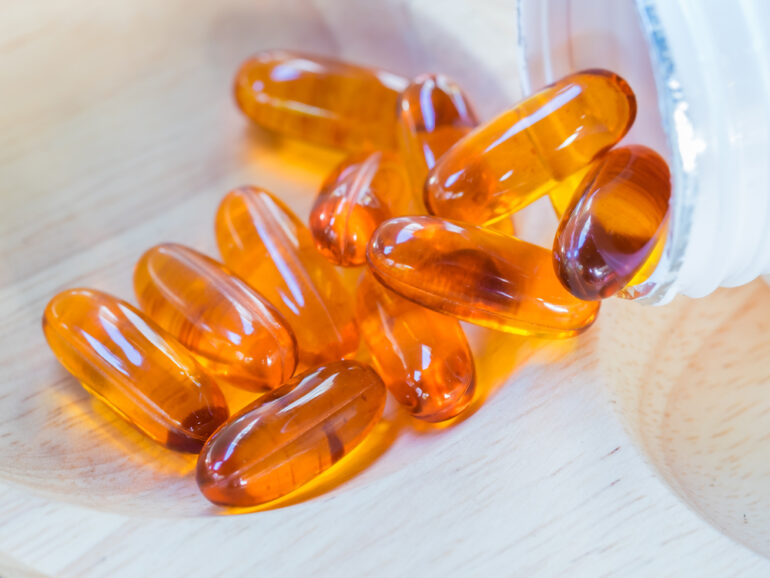
Golden fish oil softgel capsules
  • Omega-3 & Fish Oil

Omega-3s and Heart Health: An Honest Reading of the Evidence

Gerry Morton September 2, 2026
Halved coconut beside a bottle of coconut oil
  • Omega-3 & Fish Oil

Cooking Oils, Omega-6, and What to Actually Cook With

Gerry Morton September 2, 2026

Trending News

Protein and Lean Mass on GLP-1 Medications: What the Data Show Protein and Lean Mass on GLP-1 Medications - EnergyFirst blog article card 1
  • Weight Management

Protein and Lean Mass on GLP-1 Medications: What the Data Show

September 5, 2026
Whey Isolate vs Concentrate vs Hydrolysate: What You Are Paying For Whey Isolate vs Concentrate vs Hydrolysate - EnergyFirst blog article card 2
  • Whey Protein

Whey Isolate vs Concentrate vs Hydrolysate: What You Are Paying For

September 5, 2026
Collagen vs Whey: Different Tissues, Different Jobs Collagen vs Whey: Different Tissues, Different Jobs - EnergyFirst blog article card 3
  • Whey Protein

Collagen vs Whey: Different Tissues, Different Jobs

September 5, 2026
Vitamin D: What the Big Trials Actually Found Vitamin D: What the Big Trials Actually Found - EnergyFirst blog article card 4
  • Vitamins & Minerals

Vitamin D: What the Big Trials Actually Found

September 5, 2026
Creatine: What the Evidence Actually Supports Creatine: What the Evidence Actually Supports - EnergyFirst blog article card 5
  • Pre-Workout

Creatine: What the Evidence Actually Supports

September 5, 2026

About Author

Gerry Morton

President & CEO at EnergyFirst. High energy, action oriented leader committed to helping others live their best lives. Lives in Manhattan Beach, CA 90266

Connect with Us

  • Facebook

You may have missed

Protein and Lean Mass on GLP-1 Medications - EnergyFirst blog article card
  • Weight Management

Protein and Lean Mass on GLP-1 Medications: What the Data Show

Gerry Morton September 5, 2026
Whey Isolate vs Concentrate vs Hydrolysate - EnergyFirst blog article card
  • Whey Protein

Whey Isolate vs Concentrate vs Hydrolysate: What You Are Paying For

Gerry Morton September 5, 2026
Collagen vs Whey: Different Tissues, Different Jobs - EnergyFirst blog article card
  • Whey Protein

Collagen vs Whey: Different Tissues, Different Jobs

Gerry Morton September 5, 2026
Vitamin D: What the Big Trials Actually Found - EnergyFirst blog article card
  • Vitamins & Minerals

Vitamin D: What the Big Trials Actually Found

Gerry Morton September 5, 2026

Our Story

EnergyFirst, a leading company in the all-natural protein and supplement industry, was founded in 1997. We believe that everyone can benefit from drinking a protein shake, whether the goal is optimal nutrition in a meal replacement, an easy and healthy breakfast alternative, a weight loss aid, or a protein supplement for athletes.

EnergyFirst is part of NutriScience Corporation.

Shop EnergyFirst · Privacy Policy

About the Author

Gerry Morton is CEO of EnergyFirst, which he acquired in 2004. He holds a master's degree in nutrition and an executive MBA from UCLA Anderson, and is the author of The Energy Guidebook. He has finished four Ironman triathlons and more than fifty marathons — which is where most of what he writes about here has been tested.

More at gerrymorton.com.

THE ENERGYFIRST COMMUNITY

  • Facebook
Copyright © All rights reserved. | MoreNews by AF themes.