Greens powders occupy an odd position. They are among the most oversold products in the supplement aisle, and they are also genuinely useful for a specific set of people. Both things are true, and the marketing rarely tells you which category you are in.
What is actually in them
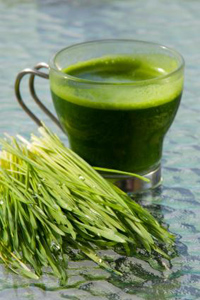
- Cereal grasses: barley grass, wheatgrass. Chlorophyll, some minerals, modest vitamin content. The mythology around chlorophyll far exceeds the evidence.
- Algae: spirulina, chlorella. Genuinely nutrient-dense: protein, carotenoids, iron, and in spirulina’s case phycocyanin, a well-studied pigment.
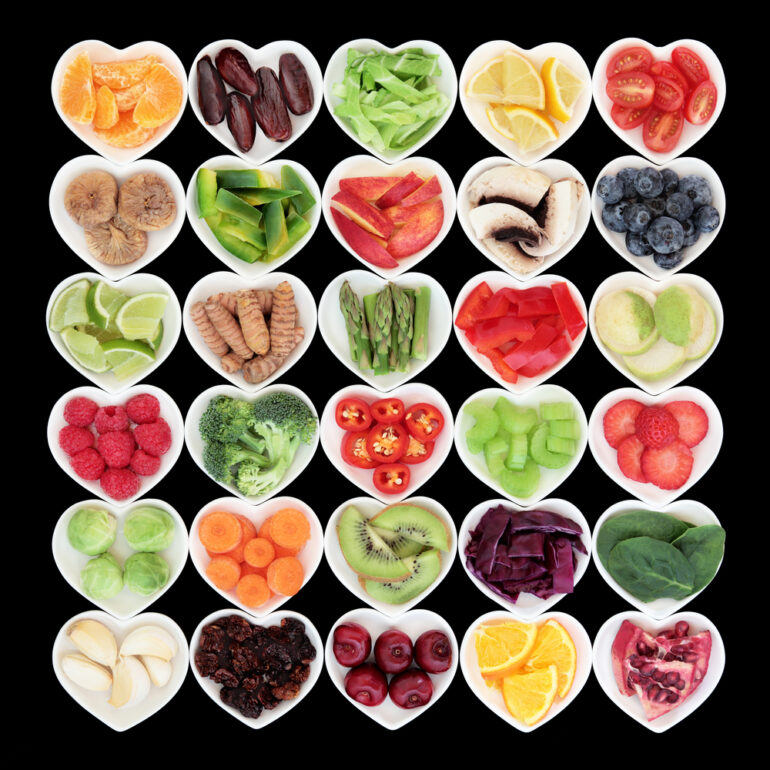
- Vegetable and fruit concentrates: broccoli, spinach, kale, beet, berry powders. These carry the polyphenols and carotenoids that most of the useful evidence actually concerns.
- Botanicals: green tea extract, turmeric, ginger. Concentrated plant compounds, dose-dependent.
- Probiotics and digestive enzymes: increasingly standard, and the component most likely to be present at token doses.
The cereal grasses are the weakest part of the tin
Wheatgrass and barley grass are the ingredients that give the category its imagery, and they have the thinnest evidence in it. The most-cited academic review of wheatgrass is titled, more or less, “the gap between basic and clinical applications”, and the title is the finding. There is a large body of test-tube and animal work, a very small number of small human trials, and those are mostly in clinical populations rather than in healthy people looking for energy.
The nutritional reality is worth stating plainly: cereal grasses are grass. Their headline marketing attribute is chlorophyll, for which humans have no established requirement and no established function once it is digested. There is no recommended intake for chlorophyll because there is nothing to recommend. What can honestly be said is that these ingredients supply small amounts of some vitamins and minerals.
What the evidence supports
Being careful here matters, because this is a category where claims outrun data.
Reasonably supported: greens powders raise blood levels of carotenoids and other plant compounds. Several trials show improved antioxidant status markers. For someone whose vegetable intake is genuinely poor, a greens powder measurably improves some nutritional markers.
Not supported: detoxification. “Alkalizing” the body: your blood pH is tightly regulated and nothing you drink shifts it. Curing or preventing any disease. Substituting for a diet.
Overstated: the serving-equivalence claims. “Equal to five servings of vegetables” is a marketing construction rather than a measurement, and we have taken it apart in detail in whether a greens powder can replace vegetables. Treat those numbers as advertising, including when they appear on our own category’s labels.
Spirulina: real research, at doses the category does not contain
Spirulina is the one ingredient in a typical greens blend with a respectable modern evidence base, so it is worth reporting properly.
A 2025 systematic review and meta-analysis in Frontiers in Nutrition pooled 28 trials across 23 studies, covering 1,035 overweight or obese adults, with doses ranging from 0.02 to 10 grams a day over two to twenty-four weeks. It was funded by university grants, with the authors declaring no commercial relationships, unusual enough in this field to be worth noting.
The results, reported at the certainty the authors themselves assigned them: a moderate-certainty reduction in LDL cholesterol; low-certainty reductions in total cholesterol, triglycerides and body weight; very-low-certainty effects on HDL and diastolic blood pressure; and no significant effect on BMI or fasting glucose. Heterogeneity between trials was high. That is a real but modest picture, in a specific population, on biomarkers rather than outcomes.
The number that matters for a shopper is the dose. The subgroup analyses pointed to two to four grams a day as the effective range. A nine-gram greens scoop in which spirulina is the fourth ingredient of twelve in a single blend is not delivering two to four grams of it, and cannot be. That is the honest reading: the research is about an ingredient at a dose, not about the product.
Chlorella has a similar shape and weaker evidence: small trials, cardiometabolic markers, low to very low certainty, and again at doses of several grams a day.
Spirulina is not a vitamin B12 source
This is the correction in this category with the most concrete consequences, and it has been settled since 1999.
Watanabe and colleagues, publishing in the Journal of Agricultural and Food Chemistry, measured commercial spirulina tablets and found what conventional assays read as 127–244 micrograms of “vitamin B12” per 100g. When they identified which cobamides were actually present, 83% turned out to be pseudovitamin B12, an adeninyl cobamide that is biologically inactive in humans. Only 17% was real cobalamin.
The mechanism is worth understanding because it explains how an honest label can be nutritionally meaningless. The standard microbiological assay used to generate label values cannot tell cobalamin from adeninyl cobamide. The number on the panel can be produced by a validated method and still describe something your body cannot use. Watanabe’s conclusion was that pseudovitamin B12 is barely absorbed in the mammalian intestine, having low affinity for intrinsic factor.
You will also see it claimed that spirulina actively blocks B12 metabolism. That rests on limited data and a rat study pointed the other way, so treat the interference question as unresolved. The non-bioavailability finding is solid and does not depend on it.
The practical point: if you avoid animal products, get B12 from a fortified food or a cyanocobalamin supplement, and do not count spirulina toward it. The National Institutes of Health’s position is that plant foods do not naturally contain vitamin B12 at all: the only plant-based sources it recognizes are fortified ones.
Heavy metals: real, and routinely reported without its context
Plants concentrate what is in their soil and water. Leafy greens and cocoa are among the most cadmium- and lead-accumulating crops there are, and drying a large volume of them into a small scoop concentrates the metals along with everything else. The direction of the concern is real and biologically expected.
The greens-specific testing is thinner than the headlines suggest but it exists. ConsumerLab tested thirteen products in 2016 and found four exceeded its lead limit, with one of those also over on cadmium and another on arsenic. No pathogens, no dangerous pesticide residues, and every gluten-free claim held up. In a 2023 round, several products again carried lead the lab considered unsuitable for regular consumption, and three spirulina tablet brands failed to disintegrate in the allotted time: a different problem, and a real one.
Where reporting usually goes wrong is the threshold. California’s Proposition 65 maximum allowable dose level for lead is 0.5 micrograms a day. The FDA’s interim reference level is 8.8 micrograms a day for women of childbearing age and 12.5 for other adults. That is a seventeen- to twenty-five-fold gap, and which number you pick decides whether a product is “unsafe” or unremarkable. For scale, half a cup of cooked spinach carries roughly 0.9 micrograms of lead and would trigger a Prop 65 warning on its own.
So the defensible position is neither the alarm nor the dismissal: concentrating plants concentrates metals, the finding is real, and the scary percentages you have read almost always rest on a warning-label trigger rather than a harm threshold.
Two practical notes. Third-party testing matters more in this category than in most: look for NSF, USP, Informed Choice or ConsumerLab. And “organic” is not protective: a large 2025 survey of protein powders found organic products were more likely to exceed California’s lead threshold, not less, because it is the plant and the soil doing the accumulating, not the farming method.
The vitamin K warning nobody puts on the front
Green leafy plants are rich in vitamin K1, and greens powders concentrate them. If you take warfarin or another vitamin K antagonist, a greens powder can meaningfully affect your INR. This is not a reason never to use one (consistency matters more than avoidance), but it is absolutely a conversation to have with whoever manages your anticoagulation before you start, not after.
How to read the label
- Are amounts disclosed? “Proprietary greens blend, 8g” tells you nothing. Descending-order listing gives you one fact: ingredient one outweighs ingredient two, and nothing about the gap. A product with thirty ingredients in an eight-gram blend contains a meaningful amount of two or three of them and a dusting of the rest.
- Check the doses you can check. Where a component is declared separately, compare it with the studied range. Probiotics are the clearest test: the accepted regulatory minimum for general gut-health benefits is around one billion CFU per serving, and many greens powders declare a few million. Ask too whether CFU is declared at manufacture or at expiry, because live organisms decline on the shelf and the two numbers are not close.
- Treat activity units sceptically. Enzyme figures in USP-U or GDU are not comparable across brands and have no reference standard you can look up. A number you cannot benchmark is not information.
- Is it tested? Given the heavy metal question, third-party testing matters more here than in most categories.
- How much sugar? Some greens powders are sweetened heavily to make them palatable.
- Ignore the ORAC score. The USDA created that measure and then deleted its own database in 2012, citing the absence of evidence that ORAC has any biological significance. It is still printed on packaging fourteen years later.
Who they are actually for
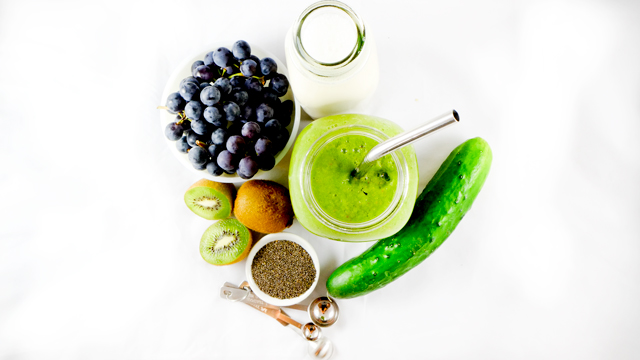
If you eat six servings of vegetables a day, a greens powder is an expensive way to add very little. If you eat one, it is a reasonable way to raise the floor while you work on the underlying problem, and travel, shift work and intense periods are real situations where the floor drops. If you would rather drink your greens, a well-built green smoothie does more for less.
The honest framing is that a greens powder is insurance, not nutrition strategy. Insurance is worth buying when the risk is real.
When a greens powder is the right tool, we recommend Greenergy. It is USDA certified organic, with twelve organic greens including spirulina, chlorella, barley grass, wheatgrass, spinach and broccoli. It is vegan, gluten free and non-GMO, 25 calories a scoop, and it mixes into water or a smoothie in seconds. At about $1.17 a day, it is the simplest way we know to get more greens on the days vegetables do not happen. Its 6 probiotic strains are a digestive extra rather than a probiotic dose. If a probiotic is the main thing you are after, take a dedicated one alongside it.
Related reading
- Can a Greens Powder Replace Eating Vegetables? Honestly, No
- What Is Actually in Greenergy
- Fiber: Soluble, Insoluble, and Which One You Actually Need
- Green Smoothie Essentials: Structure, Not Recipes
Greenergy is EnergyFirst’s greens blend, made from USDA Organic certified greens and fruits, with barley grass juice powder, spirulina, green tea extract, turmeric, probiotics and digestive enzymes.
About the Author